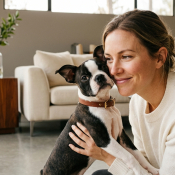


Bringing Home a Puppy: The First 7 Days That Shape Everything
The first week isn’t about teaching tricks. It’s about building trust that lasts a lifetime.
There is a moment every responsible breeder knows well.
A puppy, full of curiosity and confidence, leaves the only home it has ever known. Familiar scents disappear. Littermates are gone. New sounds, new people, new routines—everything changes within a single car journey.
For many families, bringing home a puppy is one of life’s happiest milestones. Yet those first seven days are often misunderstood. New owners focus on toys, treats and photographs, while the puppy is quietly trying to answer one question:
“Am I safe here?”
The answer you provide during that first week lays the foundation for your relationship over the next 10 to 15 years.
Understanding What Your Puppy Is Experiencing
Although your puppy may appear playful and energetic, it has just experienced one of the biggest transitions of its life.
Imagine waking up in a country where you don’t understand the language, everyone is a stranger, and nothing smells familiar. That is remarkably close to what a puppy experiences when joining a new family.
During the first few days, it is completely normal for puppies to:
- Sleep more than expected
- Eat slightly less
- Whine at bedtime
- Follow you everywhere
- Have occasional accidents
- Feel overwhelmed by excitement
None of these behaviours mean something is wrong. They simply mean your puppy is adjusting.
Patience during this stage builds confidence far more effectively than strict discipline.
Day 1: Keep the World Small
One of the biggest mistakes new owners make is turning the puppy’s first day into a celebration.
Friends arrive.
Neighbours visit.
Children want cuddles.
Everyone wants photos.
While well-intentioned, this can overwhelm a young puppy.
Instead, make Day One calm and predictable.
Allow your puppy to:
- Explore one or two rooms
- Find its bed
- Locate food and water
- Learn where to toilet
- Spend quiet time with immediate family
The goal isn’t excitement.
The goal is security.
Create a Routine Immediately
Dogs thrive on predictability.
A consistent routine helps puppies understand what happens next, reducing stress and speeding up house training.
Try to keep feeding, toilet breaks, naps and bedtime at roughly the same times every day.
Within just a few days, many puppies begin anticipating these routines, making them calmer and easier to manage.
Remember, routine creates confidence.
Night-Time: Expect Some Tears
Your puppy has never slept alone before.
It has spent every night surrounded by its mother and littermates.
The first night alone can be frightening.
Some whining is completely normal.
Rather than punishing the behaviour, reassure your puppy with calm presence while avoiding creating habits that will be difficult to break later.
Helpful tips include:
- Keep the sleeping area close to you initially.
- Provide a comfortable crate or puppy pen.
- Use familiar bedding from the breeder whenever possible.
- Keep lighting low and the environment quiet.
Most puppies settle significantly after several nights.
House Training Begins Immediately
Many owners wait several days before beginning toilet training.
That delay often creates confusion.
Instead, begin from the moment your puppy arrives home.
Take your puppy outside:
- After waking
- After eating
- After drinking
- After play sessions
- Before bedtime
When your puppy toilets successfully outdoors, quietly praise the behaviour.
Avoid punishment for accidents indoors.
Your puppy is learning, not being stubborn.
Consistency always wins over correction.
Build Trust Before Obedience
Everyone wants a puppy that sits, stays and comes when called.
Those skills matter.
But trust comes first.
Before asking your puppy to perform commands, become someone it enjoys following.
Spend time:
- Playing gently
- Hand-feeding portions of meals
- Speaking calmly
- Rewarding curiosity
- Allowing exploration
Training becomes dramatically easier once your puppy believes good things happen around you.
Keep Socialisation Positive
Socialisation isn’t about meeting hundreds of people.
It’s about creating hundreds of positive experiences.
During the first week, expose your puppy carefully to everyday life.
Examples include:
- Household sounds
- Vacuum cleaners
- Television
- Different flooring
- Gentle handling
- Car rides
- Umbrellas
- Hats
- Wheelchairs
- Men, women and children
Each experience should feel safe rather than overwhelming.
Confidence grows through quality, not quantity.
Nutrition Matters More Than Variety
A common mistake is immediately changing foods or offering numerous treats.
A puppy’s digestive system is already adapting to stress.
Introducing several new foods at once can lead to stomach upset.
Stick with the breeder’s recommended diet during the transition period.
If you plan to switch foods, do so gradually over seven to ten days.
Healthy digestion makes for a happier puppy.
Avoid Over-Exercising
Puppies have enormous bursts of energy.
That does not mean they need long walks.
Growing bones and joints are still developing.
Instead, provide:
- Short play sessions
- Gentle exploration
- Mental enrichment
- Training games
- Plenty of naps
Sleep is one of the most important parts of healthy puppy development.
Many young puppies sleep between 16 and 20 hours each day.
That is perfectly normal.
The Importance of Gentle Boundaries
Love without structure creates confusion.
Structure without kindness creates fear.
The healthiest relationship balances both.
From the beginning:
- Decide where the puppy sleeps.
- Decide whether furniture is allowed.
- Establish consistent household rules.
- Ensure every family member follows the same expectations.
Mixed messages slow learning.
Consistency accelerates it.
Your Puppy Is Always Learning
Training doesn’t begin at puppy class.
It begins the moment your puppy enters your home.
Every interaction teaches something.
If jumping earns attention…
The puppy learns jumping works.
If barking earns treats…
The puppy learns barking gets rewards.
Likewise, every calm interaction teaches calm behaviour.
Every successful toilet trip teaches good habits.
Every positive experience builds resilience.
Whether you realise it or not, your puppy is learning all day, every day.
Remember: Progress Isn’t Linear
Some days your puppy will seem to master everything.
The next day it may appear to forget it all.
This is completely normal.
Development isn’t a straight line.
Growth comes in waves.
Celebrate small victories:
- Sleeping through the night
- Going outside consistently
- Learning its name
- Following you willingly
- Choosing calm behaviour
Those little milestones eventually become lifelong habits.
The First Week Ends. The Bond Begins.
Years from now, your dog won’t remember the toys you bought.
It won’t remember the colour of its bed.
It won’t remember how expensive the collar was.
But the trust you built during those first seven days will influence every interaction that follows.
A confident puppy becomes a confident companion.
A patient beginning creates a lifetime of understanding.
The first week is not about perfection.
It’s about becoming your puppy’s safe place.
And that may be the greatest gift you will ever give.
Frequently Asked Questions
How long does it take a puppy to settle into a new home?
Most puppies begin settling within the first week, although full adjustment typically takes several weeks. Patience, routine and consistency make the transition much easier.
Should I let my puppy cry at night?
A small amount of whining is normal during the first few nights. Provide reassurance without encouraging dependency, and ensure your puppy feels safe and comfortable.
When should training begin?
Immediately. Early training should focus on trust, routine, house training and learning the puppy’s name rather than advanced obedience.
Is it normal if my puppy doesn’t eat much on the first day?
Yes. Mild appetite changes are common after moving to a new home. Continue offering the breeder’s recommended food and monitor your puppy’s overall health and hydration.
What’s the biggest mistake new puppy owners make?
Trying to do too much too soon. The first week should prioritise security, routine and bonding rather than constant visitors, long outings or intensive training.
Final Thoughts
At Romati Bostons and Pugs, we believe every puppy deserves more than a new address—it deserves a family prepared to nurture its confidence from the very beginning. Those first seven days may seem small in the span of a dog’s life, but they often shape the trust, security and companionship you’ll enjoy for years to come.
If you’re preparing to welcome one of our puppies, remember that perfection isn’t the goal. Patience, consistency and kindness will always matter more than getting everything right on day one.

All Categories
Recent Posts

What Makes a Truly Well-Bred Boston Terrier?

Bringing Home a Puppy: The First 7 Days That Shape Everything